
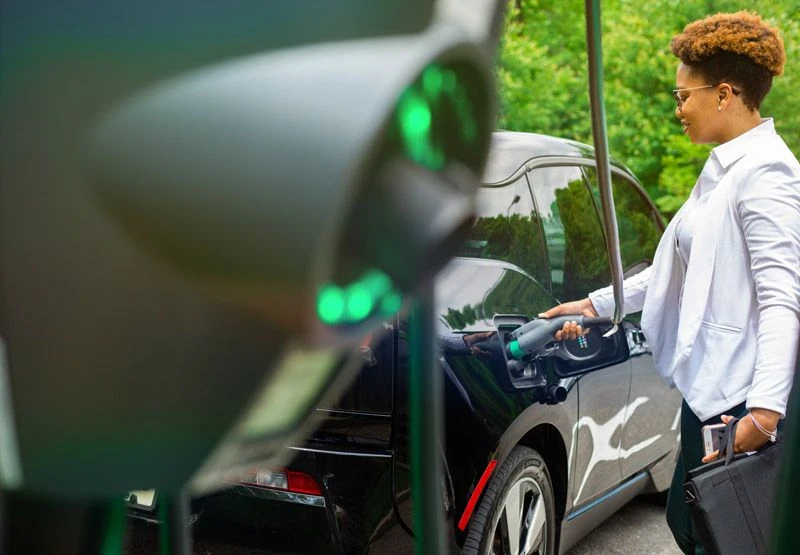
What are EV (electric vehicle) chargers? In essence, an EV charger works much like your mobile phone charger; the only difference is its purpose – charging your electric vehicle. Just as mobile devices need a steady supply of power, EVs need a similar charge to keep moving. By plugging into your vehicle’s charging socket, the charger draws energy from the grid or your home’s solar system to power up your EV.
Powering the Future of Mobility
The demand for EV chargers is now widespread. Research predicts that electric vehicles will soon surpass traditional vehicles, driven by a swift and persistent trend. This is evident from surging EV sales, the growing number of EVs on the road, and government EV mandates. The message is clear: the electric future is imminent, and EV chargers will play an essential role in reshaping how we live.
Types of EV Chargers
Type 1 EV Charger
- Basic; plugs into home mains for gradual charging.
- The slowest of the EV chargers.
- Affordable, and sometimes included free with certain EV models.
- Suitable when charging time isn’t a crucial concern.
Type 2 EV Charger
- Wall-installed, using AC electricity.
- Highly popular and efficient.
- Compatible with grid power or solar energy.
- Ideal for hassle-free home charging.
Type 3 EV Charger
- Found in car parks and commercial stations.
- Ground-mounted; uses DC energy.
- Not suitable for homeowners.
If you’re weighing up the first two options for home use, our guide to Type 1 vs Type 2 EV chargers goes into more detail.
EV Chargers – Charging Time Breakdown
Charging times vary across three levels – Level 1, Level 2 and DC Level 3 – depending on the type of charging point used.
Level 1:
- Charges at 2 to 5 miles per hour.
Level 2:
- 15 times faster than Level 1, averaging 13–75 miles per hour.
- An optimal choice for home charging stations.
DC Level 3:
- Charges to 80% within 10 to 30 minutes.
- A rapid option, but not suitable for all EVs.
Benefits of Embracing EV Chargers
ROI Enhancement:
- EV chargers deliver substantial returns on investment, and can also boost your solar system’s ROI.
Greater Convenience:
- Home EV chargers add convenience by allowing hassle-free overnight charging.
Cost-Effective Energy:
- Running on solar power or the grid, EV chargers ease concerns about rising fuel costs.
Final Verdict
In short, an EV charger is a home energy solution that can save you the cost of fuel. It also lets you charge your vehicle at home, so there’s no need to plan trips to fuel stations or wait in queues. Pairing one with solar makes even more sense – see why solar is a smart investment. The electric future beckons, and with it the promise of cleaner, more convenient transport.
Our solar installers can walk you through the features and help you find the optimal fit for your EV. Get a free quote today.