
Micro-inverters vs string inverters vs panel optimisers: everyone is transitioning to solar to bid farewell to high energy bills. By now, we are all quite familiar with the two main components of a solar system: solar panels and solar inverters. Most of us also know there are several types of inverter available. One common choice is the PV string inverter, which is popular in Australia due to its affordability.
Beyond that, there’s a world of technology like micro-inverters and panel optimisers, and determining which is superior can be a challenge. This information is invaluable in helping you decide which option suits your home best. In a nutshell, the technology behind micro-inverters and power optimisers outshines string inverters, offering additional benefits that can make all the difference. If you are weighing up specific brands, our comparison of SunGrow vs Fronius inverters is a useful next step.
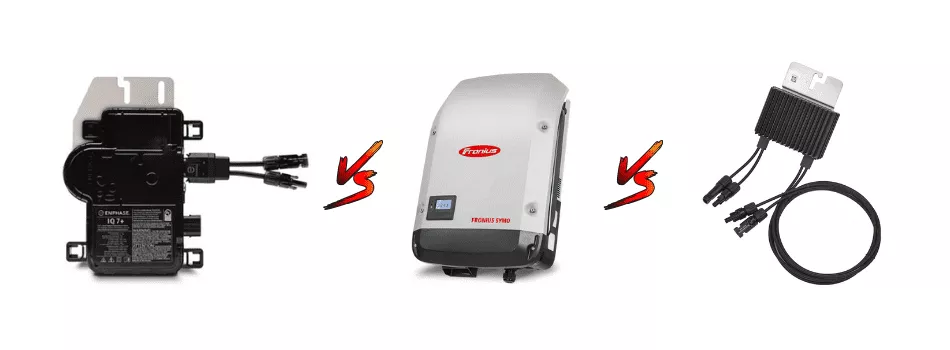
What is a Micro-Inverter?
A micro-inverter is an inverter compatible with the majority of solar systems, enhancing their efficiency. It carries out AC conversion at each panel, directly boosting system performance. As sunlight reaches the solar panels, the micro-inverter promptly transforms it into AC power.
A micro-inverter also enhances safety by reducing the distance high-voltage currents must travel. With individual operation for each solar panel, optimal positioning is possible to suit your energy consumption needs.
What is a String Inverter?
A string inverter involves wiring your panels together in a series, allowing multiple inputs and converting DC into AC within a single unit. String inverters are widely used for home systems and perform efficiently where there is no shading.
The string inverter converts DC energy to AC energy. This process relies on strings and cables connecting the panels and inverter, transporting DC energy throughout your home. Among the numerous manufacturers of string inverters, Fronius and SunGrow stand out as leaders in the field.
What is a Panel Optimiser?
A panel optimiser is a device fitted to each solar panel that conditions its DC output before sending it to a central inverter. It lets each panel perform independently, so shading or a fault on one panel does not drag down the rest of the array.
Micro-Inverters vs String Inverters vs Panel Optimisers
Suitability for Residential Users
All three options can suit residential homes, but the right choice depends on your roof and budget. String inverters are a cost-effective fit for simple, unshaded roofs, while micro-inverters and panel optimisers are better suited to complex roofs with multiple orientations or partial shading.
Performance and Efficiency
A micro-inverter eliminates one common issue: the performance of any single panel will not affect the rest of the panels, because micro-inverters optimise each panel individually. Micro-inverters are more beneficial than string inverters and panel optimisers in many ways. The top benefit is that you can easily add a new panel without affecting the performance of the others. This independence is valuable, as it also makes faults easy to diagnose.
Micro-inverters can further enhance the efficiency of your panels by accurately identifying the optimal voltage for the system and generating maximum power voltage. Panel optimisers have this capability as well.
Micro-inverters and panel optimisers improve the performance of solar systems on challenging roofs. They enable individual panel monitoring, a valuable feature for homeowners tracking energy production, usage and return on investment (ROI).
Energy Conversion
Panel optimisers do not convert energy like micro-inverters; instead, they condition DC energy before transmitting it to the inverter. This conditioned DC energy undergoes more efficient conversion than regular DC energy, resulting in reduced energy loss.
String inverter systems lack design flexibility, making them unsuitable for smaller or uniquely shaped roofs. By contrast, micro-inverters and panel optimisers are highly recommended for such scenarios. Panel optimisers and micro-inverters provide design flexibility because adjacent panel placement isn’t necessary — each unit operates independently of the others.
Final Verdict
Quick summary:
- Micro-inverters and panel optimisers are safer than string inverters.
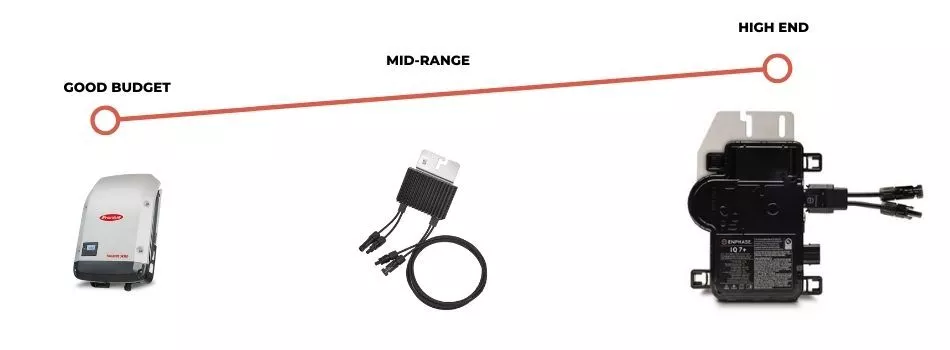
- String inverters offer fast ROI and affordability.
- Panel optimisers and micro-inverters are more advanced.
- Both advanced options offer long warranties.
Opting for a panel optimiser or micro-inverter over a string inverter is a good choice for many homes. For a wider view of the market, read our comparison of Fronius vs SunGrow vs Growatt inverters. For more insights, contact our experienced solar installers and get a free quote anytime. Our excellence is reflected in our reviews — be sure to check them out!